

























Irreverent Reviews
Tao Te Ching
Laozi · Circa 4th century BC
The wisest book on earth, rewritten by a California poet who reads no Chinese—and somehow Laozi, who may not have existed, still wins.
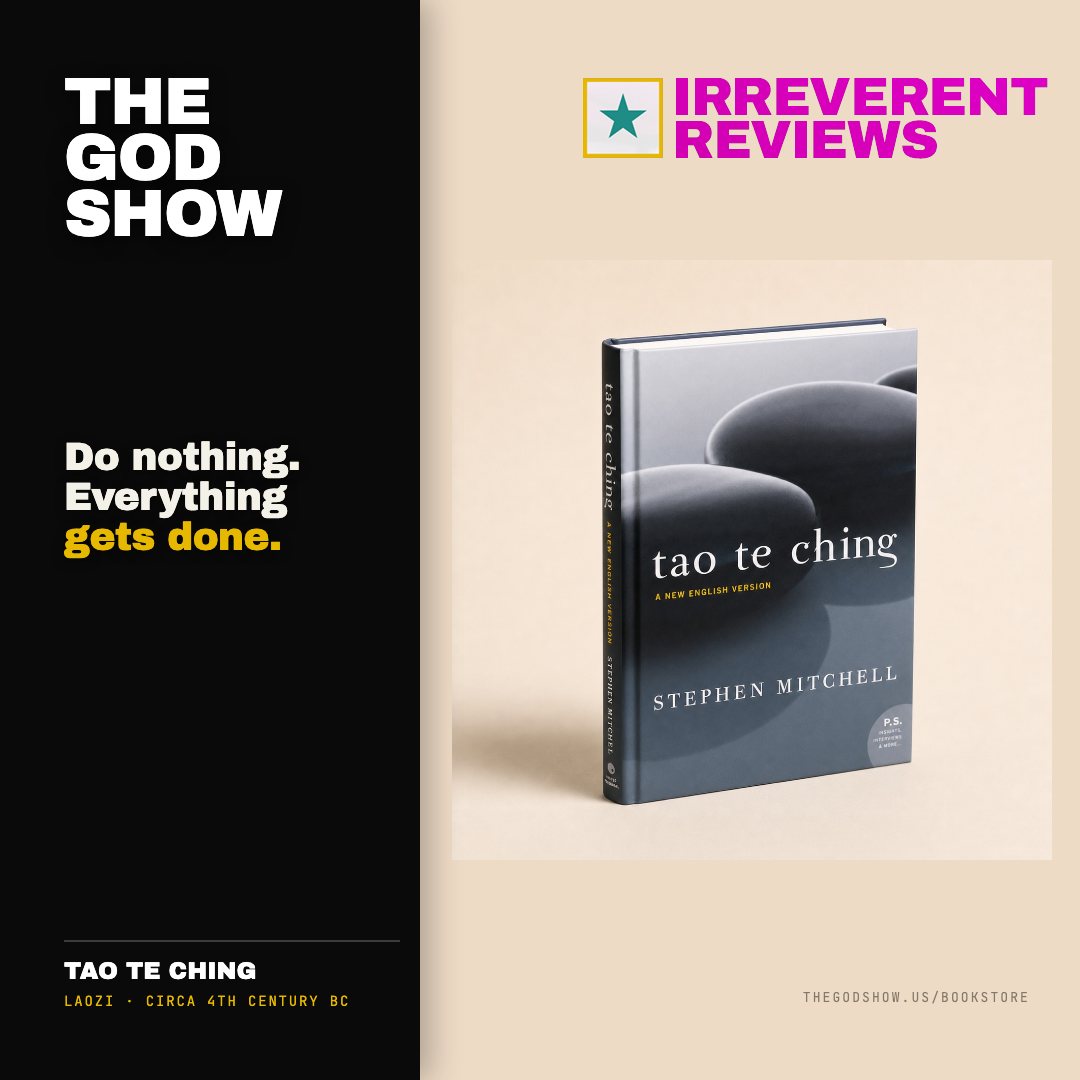
Buy on Amazon →Sometime around the fourth century BC, a royal archivist allegedly got so disgusted with civilization that he climbed onto a water buffalo and headed for the western frontier. The border guard refused to let him leave until he wrote down what he knew. Eighty-one short chapters later, Laozi rode off into legend—if he existed at all, which scholars politely doubt. What he left behind became the most translated book on earth after the Bible, and the only scripture whose opening move is to announce that scripture is impossible: the Tao you can name, it warns, is not the real Tao. Stephen Mitchell's 1988 version is the one on every American nightstand, which is its own cosmic joke, because Mitchell does not read Chinese.
Wu Wei, or Winning by Lying Down
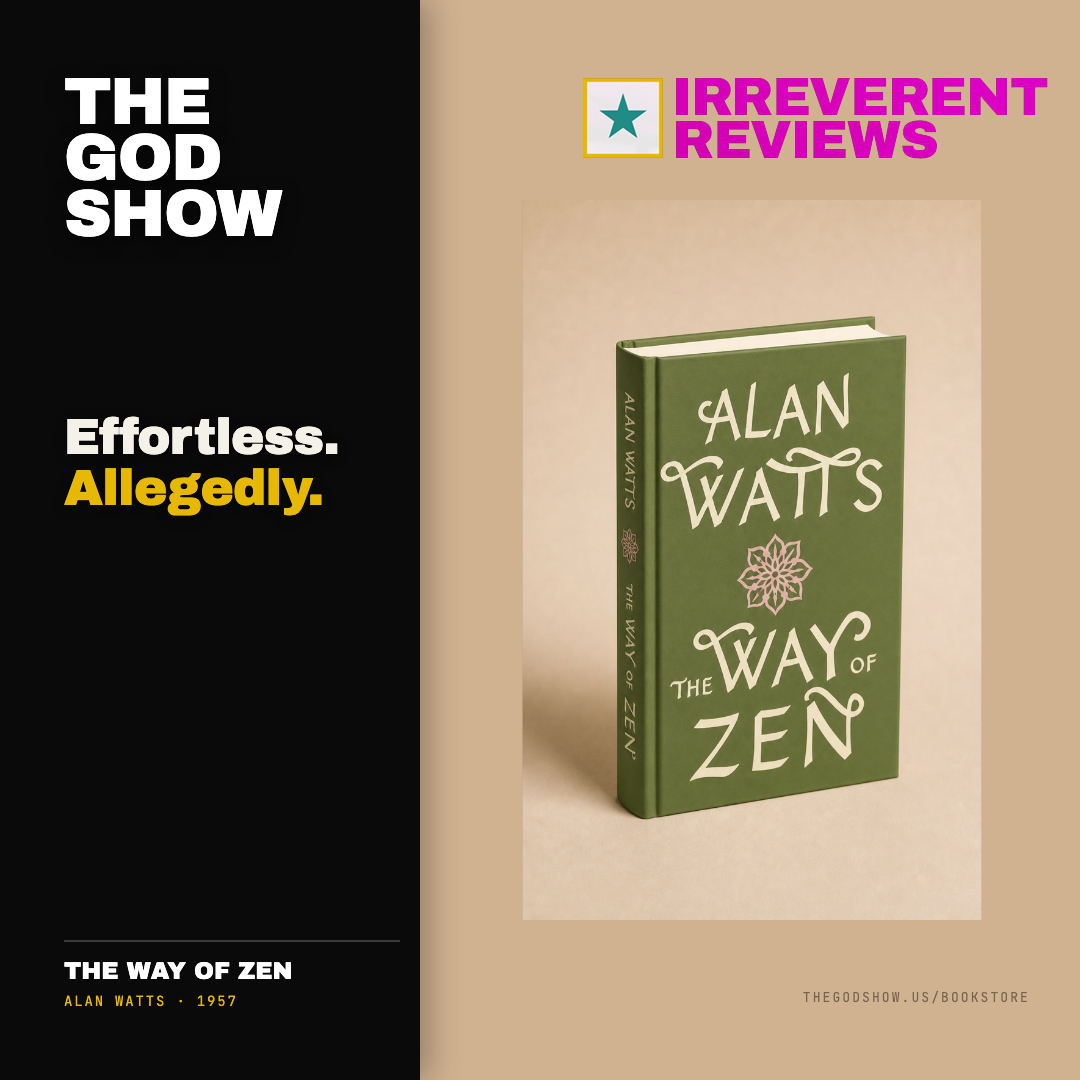
The core move is wu wei—effortless action, working with the grain instead of against it. Water, the book's favorite mascot, is soft, lazy, and patient, and it carves canyons. Govern a large country, Laozi advises, the way you would cook a small fish: stop poking it. The best leader is the one the people barely notice; the strongest thing in the room is the one not straining. This is not passivity. It is precision so total it looks like rest. In 2026, every startup founder has a wu wei slide in the pitch deck and a 2 a.m. Slack habit that says otherwise.
Eighty-One Ways to Say Almost Nothing
Structurally, the book is a rock garden: aphorisms, paradoxes, and deliberate contradictions arranged so sparsely that your own mind rushes in to fill the gaps. That is the design. Language, for Laozi, is a finger pointing at the moon, and the book keeps slapping the finger down. Chapters address kings and hermits in the same breath, because the empire and the self need identical management: less.
The Translator Who Isn't
Mitchell came to the text through fourteen years of Zen training and a stack of earlier English translations, and the cover honestly calls his book a new English version, not a translation. HarperCollins reportedly paid a six-figure advance—spectacular money for a 2,500-year-old author who could not take a meeting. Sinologists grumble that whole lines are more Marin County than ancient China, and they are right. And yet. The man who may not exist wrote the book that can't be written, and the man who can't read it made it a bestseller. Laozi, wherever he is, is not surprised.
“The man who may not exist wrote the book that can't be written, and the man who can't read it made it a bestseller.”
Verdict
Here is the scandal: it mostly works. Mitchell's lines are clean, quotable, and frictionless, and a book that claims water wears down stone can evidently survive being poured through California. You can read it in twenty minutes and fail to live it for fifty years—that ratio is the whole teaching. Pour two cups of tea: one for Laozi, and one for whoever he was.