

















































Irreverent Reviews
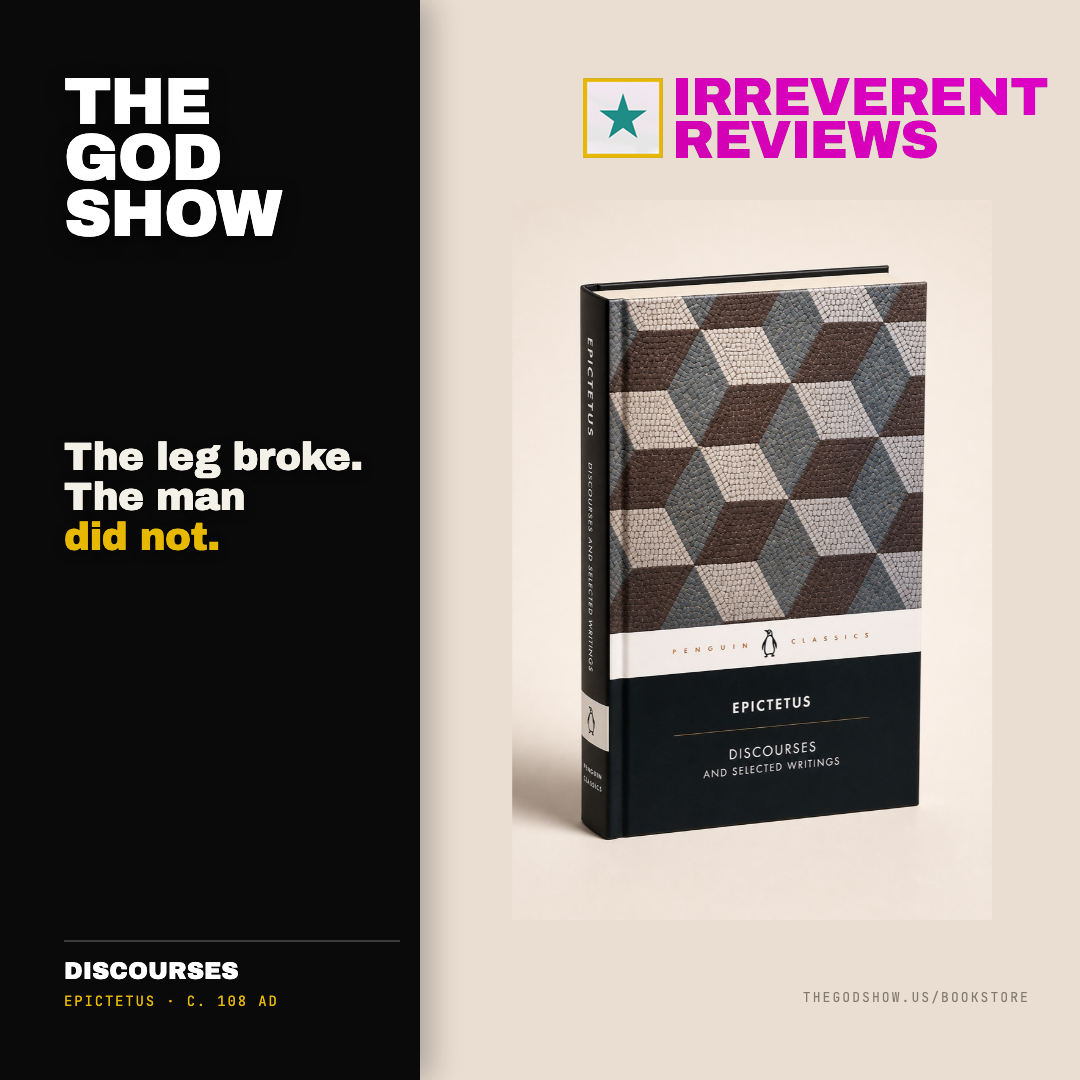
Discourses and Selected Writings
Epictetus · c. 108 AD
Roman elites paid tuition to be verbally demolished by a formerly enslaved teacher who insisted they already owned the only thing worth having.
Buy on Amazon →Marcus Aurelius had an empire and Seneca had a fortune; Epictetus had a lamp, a bad leg, and the most dangerous classroom in the Roman world. Born enslaved in Phrygia and owned by one of Nero's own secretaries, he came to philosophy the hard way and taught it the harder way — by demolition. The Discourses are not a book he wrote; they are transcripts his student Arrian took down while the old man dismantled the anxieties of Rome's ambitious young men, four volumes of which survive. Epictetus is the one Stoic you cannot call a hypocrite, and the one most likely to call you one.
Owned, Lamed, Unbothered
The famous story — preserved, of all places, by an ancient critic of Christianity citing pagan toughness — has his master twisting his leg while Epictetus calmly observes that it will break, and then, once it does, notes that he had said so. The duller tradition blames rheumatism. Believe whichever you like; the limp was real and so was the composure. He studied philosophy while still enslaved, was freed after Nero's fall, and taught in Rome until the emperor Domitian banished the philosophers, at which point he set up shop in Nicopolis on the Greek coast — where the empire's future governors sailed out to be told that their bodies, careers, reputations, and families were, strictly speaking, not theirs.
The Dichotomy That Eats Excuses
His entire system fits in one cut: some things are up to you — judgment, desire, intent — and everything else is not. Your body is on loan. Your reputation is other people's weather. Your possessions are props issued for a play whose casting you do not control; your job is to perform the assigned role beautifully and hand the props back without sniveling. Marcus Aurelius, who never met him, treasured a borrowed copy of these lectures and jotted down a line he credited to Epictetus about being a little soul hauling a corpse around. Emperors took notes on a man Roman law had classified as property. In 2026, coaches with ring lights charge four figures an hour to repeat what he said for free in a rented room — minus the part where he calls you a slave to your own opinions, which is the only part with teeth.
The 3,000-Drachma Clay Lamp
He owned almost nothing on principle. When a thief took his iron lamp, he downgraded to clay, reasoning that the thief had overpaid — the lamp cost the man his honesty. After Epictetus died, a satirist reports, a collector paid three thousand drachmas for that clay lamp, hoping to absorb wisdom by owning a dead man's stuff. Every Stoic-branded tote bag since is that collector's descendant. The old man would have found the whole economy hilarious, then asked, mid-laugh, what exactly you were hoping the purchase would fix.
“Epictetus is the one Stoic you cannot call a hypocrite, and the one most likely to call you one.”
Verdict
Skip the throw pillows and read the source. The Discourses are rude, repetitive, alive — a teacher grabbing students by the toga and shaking until the excuses fall out. Nothing in the self-help aisle has improved on him; most of it is him, diluted. Raise a clay cup of water to the freest man in the empire: they could own his body, break his leg, and exile his school, and none of it ever once got inside.