













































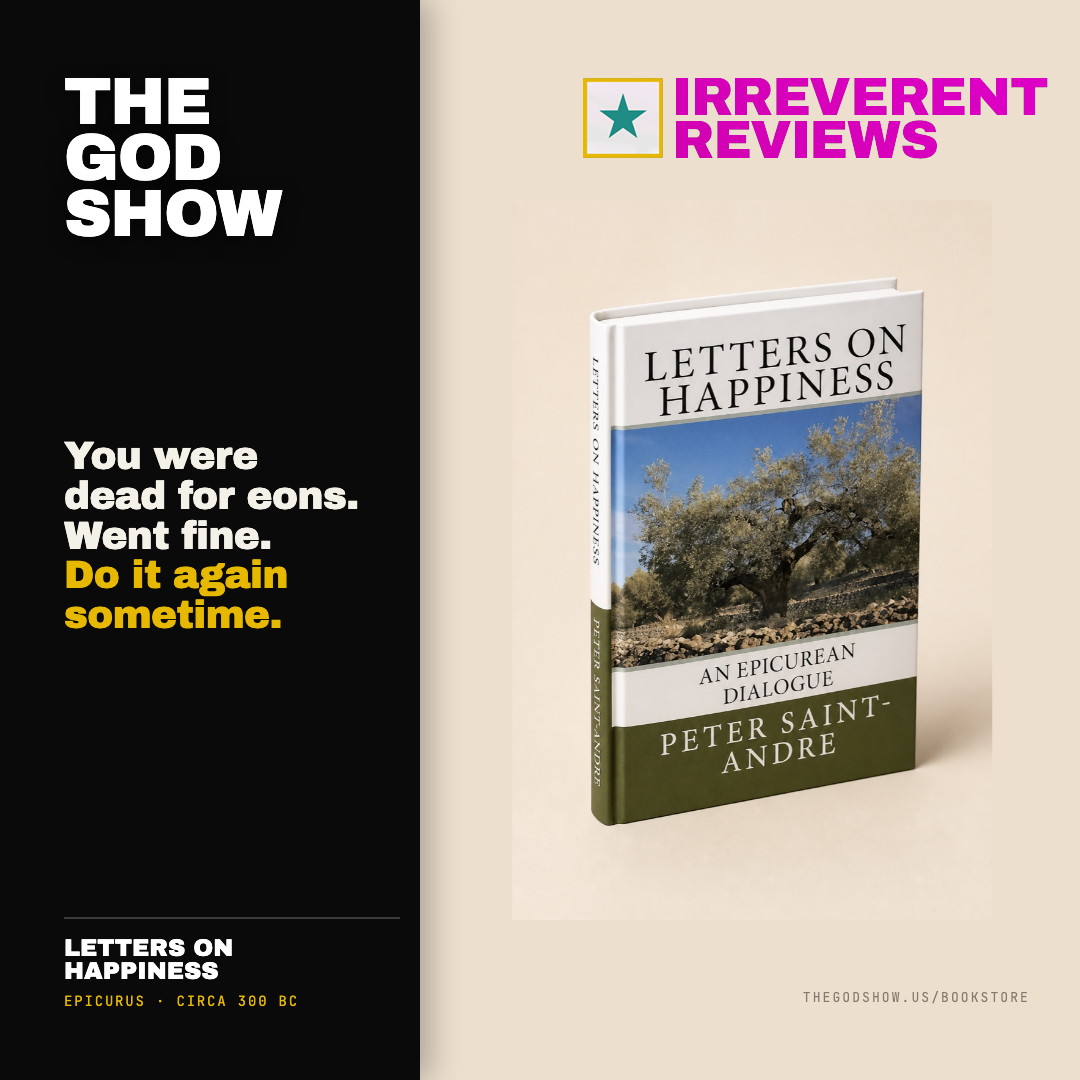





















Irreverent Reviews
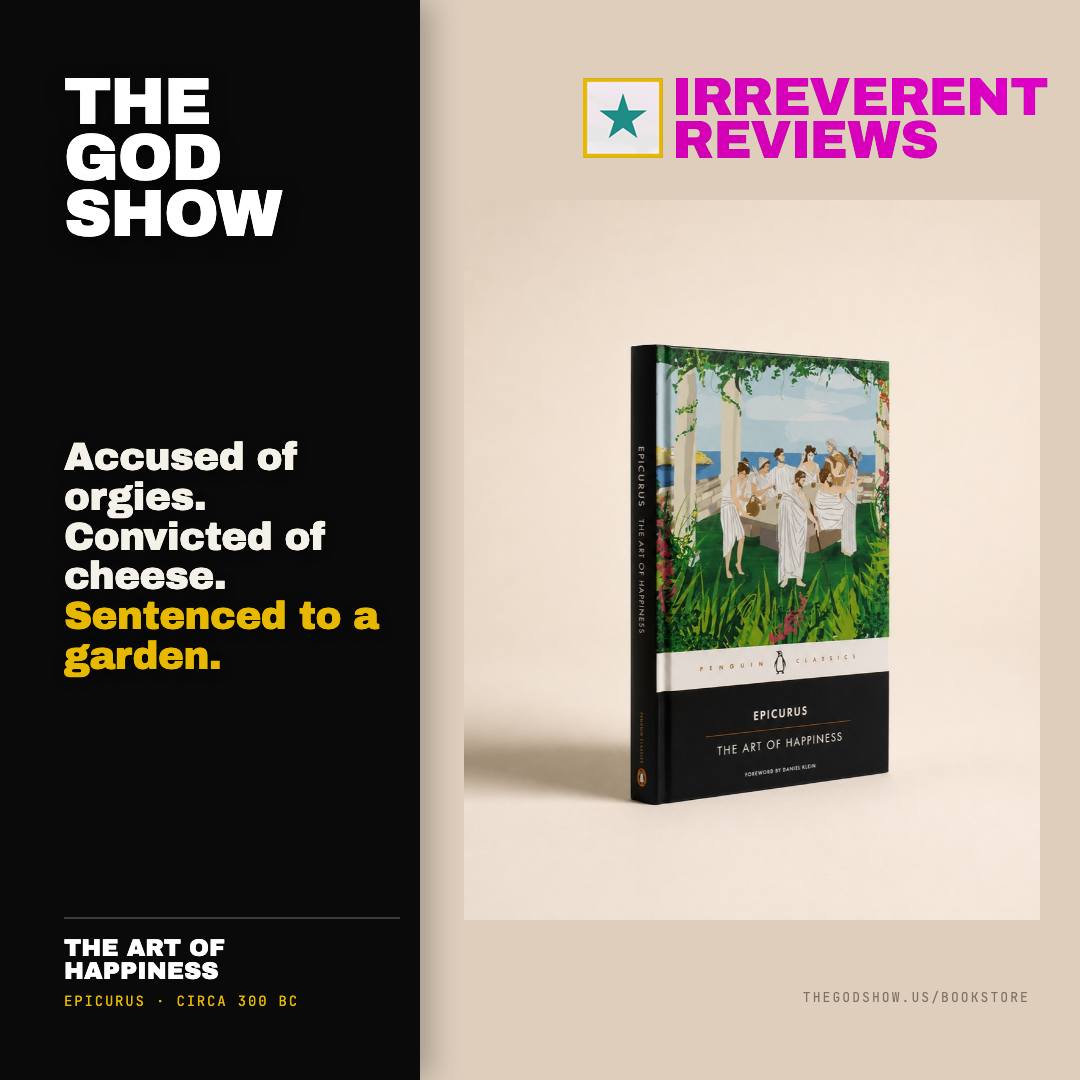
The Art of Happiness
Epicurus · Circa 300 BC
His name became a synonym for fine dining. His menu was bread and water. Everything that survives of Epicurus is a system for subtracting fear, not adding truffles.
Buy on Amazon →No philosopher has been libeled this thoroughly for this long. His name became a restaurant adjective. His school—a quiet garden where the menu was bread, water, and the occasional triumphant pot of cheese—went down in rumor as antiquity's most exclusive orgy. Rival philosophers circulated forged letters to make him look depraved. The truth, assembled in this Penguin edition of everything that survives—three letters, two collections of sayings, scraps quoted by other people—is more subversive than the smear: Epicurus built a complete technology for being un-terrified, and it worked so well the competition had to lie about him for two thousand years.
The Most Slandered Man in Philosophy
Start with the rap sheet. Epicurus, born on Samos in 341 BC, set up shop in a garden outside the walls of Athens and committed the genuinely outrageous act: he admitted women and slaves as students and equals. That—not debauchery—was the scandal. Nothing terrifies a status hierarchy like people opting out of it cheerfully. The orgies were invented later, complete with fabricated correspondence, because his actual definition of pleasure was unprintably modest: absence of pain in the body, absence of turbulence in the soul. Not maximization. Subtraction. The hedonist of legend turns out to be a man doing an audit—sorting desires into the natural and necessary (food, shelter, friends), the natural but optional (the cheese), and the vain (fame, luxury, your follower count), then quietly canceling the third category like so many subscriptions.
Physics as Anxiety Medicine
The weird, wonderful spine of this book is that two of its three letters are about physics. Atoms and void, infinite worlds, the mechanics of weather. Why? Because Epicurus diagnosed fear—of gods, of omens, of death—as the root disturbance, and explanation as the cure. The gods exist, he says, but they are perfect, distant, and supremely uninterested in you; thunder is meteorology, not commentary. Learn how the machine works and the sky stops being a threat dashboard. In 2026, when every push alert is engineered to read like an omen, his prescription—understand the mechanism, delete the dread—remains the cheapest therapy on the market.
The Garden Was the Point
He wrote around three hundred scrolls. Nearly all of it is gone—history's most prolific philosopher of happiness survives as a pamphlet, which may be the darkest joke in the classical canon. What the fragments protect is the priority list: friendship above almost everything, politics avoided, life lived unnoticed. And then the receipts: dying of kidney stones at seventy-one, he wrote to a friend that the pain could hardly be worse—and that it was outweighed by the joy of remembering their conversations together. That is not a man whose philosophy failed under load testing. That is the load test.
“Nothing terrifies a status hierarchy like people opting out of it cheerfully.”
Verdict
The Art of Happiness is the entire surviving operating system: physics to kill the fear, ethics to sort the wants, friends to make it worth running. It is short because his enemies were thorough, and convincing because his life was. Read it, then look at an economy expertly engineered to manufacture the exact category of desire he flagged as the disease. Then raise a glass of water—he would insist on the water—to the calmest man defamation ever made famous.