


































Irreverent Reviews
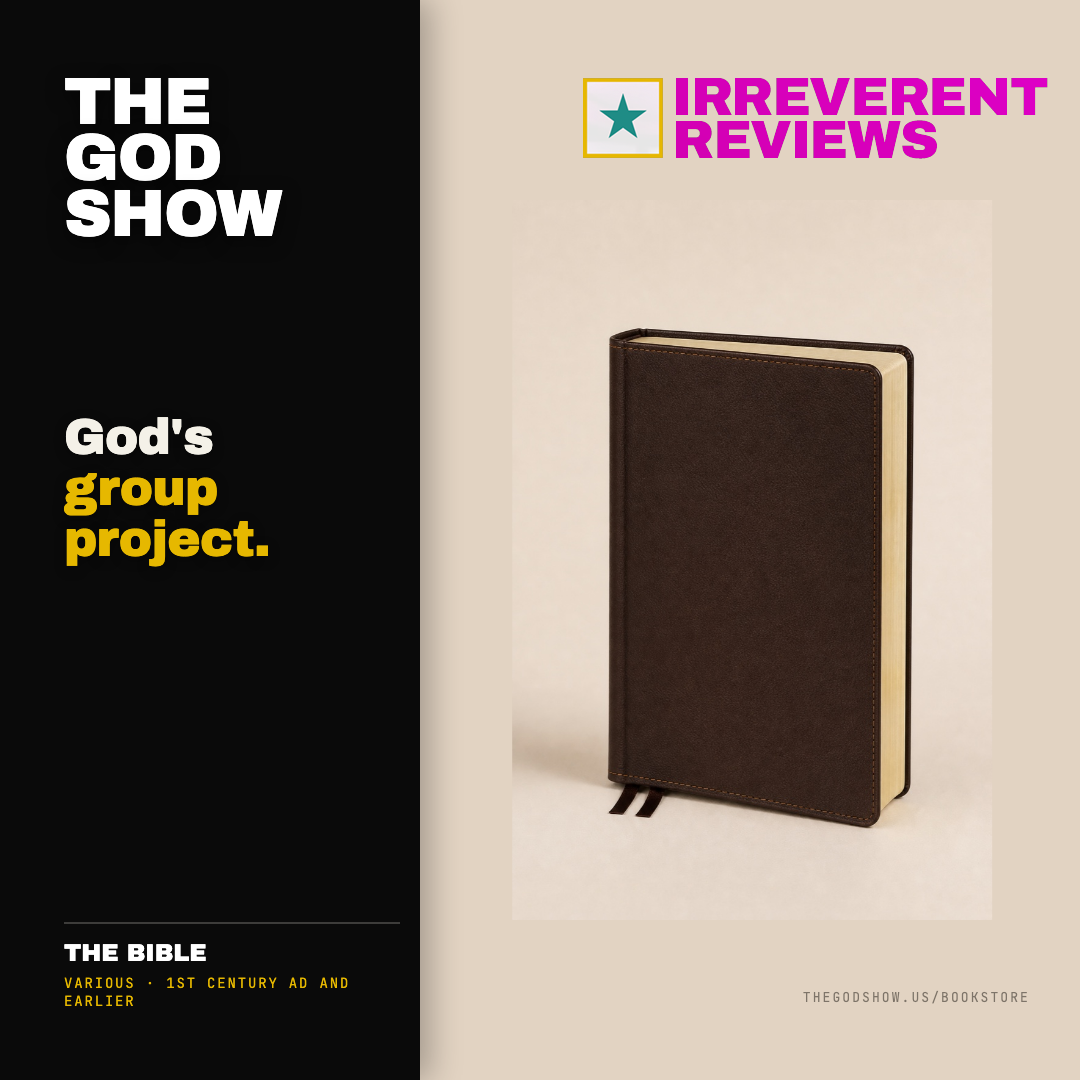
The Bible
Various · 1st century AD and earlier
Sixty-six books, dozens of authors, a thousand-plus years of blown deadlines—now with ruled margins so you can journal your feelings beside Leviticus.
Buy on Amazon →Stop calling it a book. The Bible is a library wearing a trench coat—sixty-six volumes in the Protestant cut, written across a thousand-plus years by shepherds, scribes, kings, fishermen, at least one tax collector, and a tentmaker with opinions about everybody. Law codes sit next to erotic poetry. War chronicles share a spine with lullabies. Ecclesiastes, the canon's in-house nihilist, broods two doors down from a fever dream in which a dragon chases a pregnant woman across the sky. No single author. No house style. No editor with the authority to cut. It is the strangest anthology ever bound, and publishing has gratefully ridden it for two millennia—most recently as a Journal the Word edition with ruled margins, so you can annotate the apocalypse in your own handwriting.
Canon Fire: Who Picked the Table of Contents
Nobody sat down to write the Bible. Communities argued it into existence over centuries, and the arguments were vicious. In the second century, Marcion proposed a slimmed-down edit—one gospel, a fistful of Paul, zero Hebrew scripture—and got branded a heretic for his trouble: history's first canceled editor. The twenty-seven-book New Testament didn't get a stable contents page until a bishop's Easter newsletter in 367 AD. Twelve centuries on, Luther was still trying to demote James to the back of the book. Catholic, Protestant, and Orthodox shelves disagree to this day, which tells you what this thing actually is: not a monolith handed down on a cushion but a brawl with a binding.
The Good Parts Nobody Underlines
Here is the scandal: the most quoted book on earth is mostly unread, and the unread parts are the best parts. Job—where a ruined man demands answers and God shows up in a storm to ask whether he can take a sea monster fishing, which is somehow both a non-answer and the only answer—is the boldest move in ancient literature. Psalm 88 is the prayer that ends in the dark with no resolution, kept in the hymnal anyway. The Song of Songs is frankly thirsty pastoral poetry that made centuries of commentators sweat through allegories about the church. The parables are flash fiction with trapdoors, hostile to easy morals, designed to detonate a week later. The people who weaponize this library tend to camp in the same six verses. The library keeps offering them Ecclesiastes, and they keep declining.
Most Owned, Least Finished
Print runs in the billions, completion rates that die quietly in the begats of 1 Chronicles. In 2026 the bestseller lists still leave it off the charts for the simple reason that it would never leave. Hotel nightstands stock it on spec. And now the journal edition prints it with wide ruled margins—honest design, when you think about it, because a margin assumes the reader will talk back. Talking back is a biblical genre. Job did it for thirty-odd chapters, and the editors who cut so much else kept every word of his complaint.
“No single author. No house style. No editor with the authority to cut.”
Verdict
Read it like a library, not a verdict. Skip around. Argue in the margins—the canon kept Job, so back-talk is practically liturgy. You will find tedium, horror, bookkeeping, and at least three of the finest things ever written in any language, shelved side by side with no warning whatsoever. Two thousand years of marketing have tried to flatten this anthology into a brand, and it keeps refusing. Here's to the strangest library ever shelved: still open, still arguing, and still waiting—patiently, like its God—for somebody to finish it.