




Irreverent Reviews
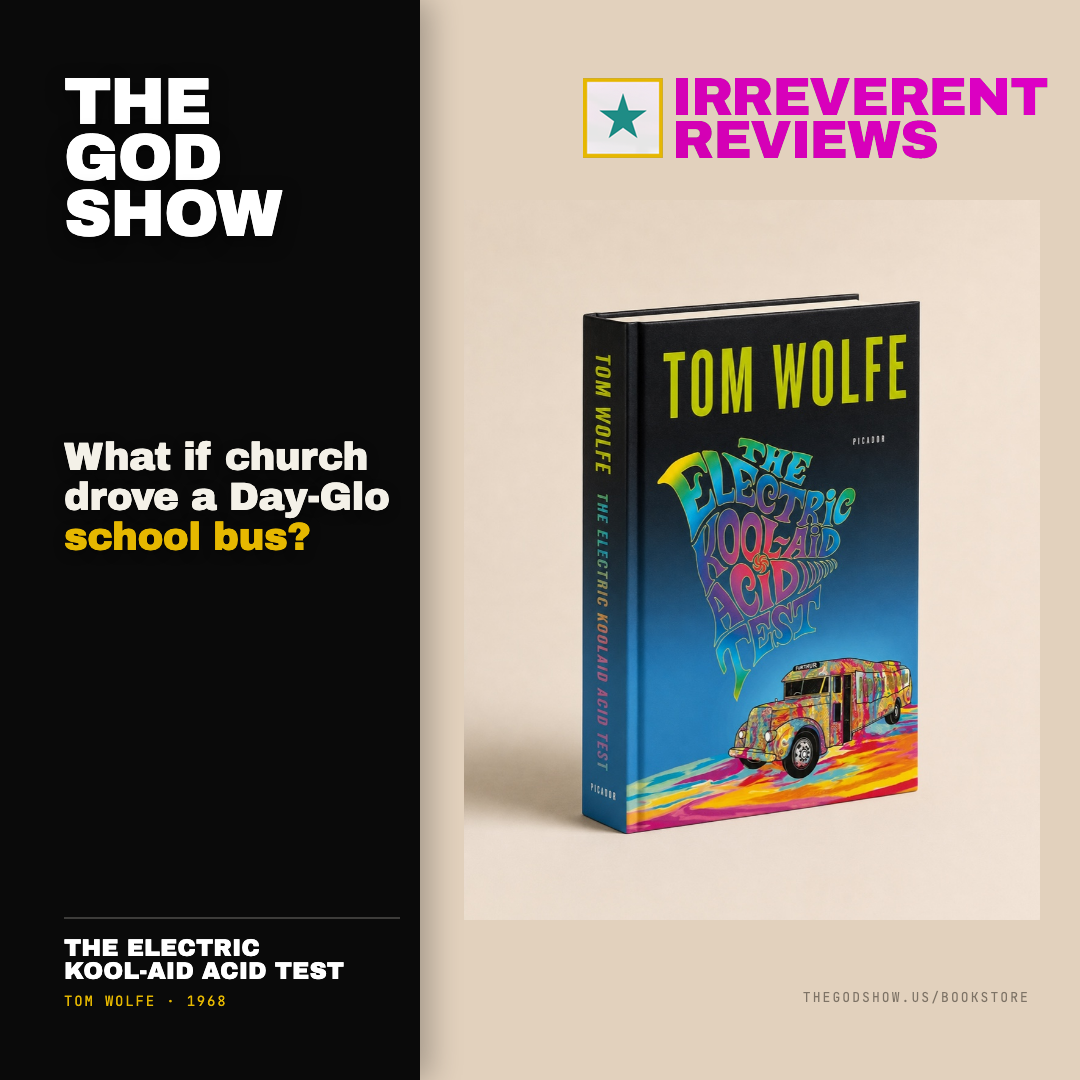
The Electric Kool-Aid Acid Test
Tom Wolfe · 1968
Tom Wolfe, sober in a white suit, rides along with Ken Kesey's Merry Pranksters and files the founding gospel of psychedelic America.
Buy on Amazon →In 1964 Ken Kesey, fresh off One Flew Over the Cuckoo's Nest, loaded a crew of proto-hippies called the Merry Pranksters into a 1939 school bus painted like a migraine, put Neal Cassady — Kerouac's actual Dean Moriarty — behind the wheel, and drove east to meet America. Tom Wolfe, a Virginia dandy in a white suit who barely touched the sacrament himself, reconstructed the whole saga and accidentally wrote the founding gospel of psychedelic America. The Electric Kool-Aid Acid Test is not really a book about drugs. It is field notes on how a religion gets born, taken by the squarest man at the orgy.
The Founder and His Apostles
Wolfe saw the pattern before the participants did, and he says so on the page: a charismatic founder, an inner circle living communally, ecstatic group experiences no outsider can share, and a doctrine of total commitment — you are on the bus or off the bus. Kesey plays the reluctant prophet who refuses to write anything down. The Acid Tests, those strobe-lit happenings with a house band that had just renamed itself the Grateful Dead, are the liturgy; the spiked Kool-Aid is communion, served while LSD was still legal in California. Wolfe even tracks the sect through persecution and exile — Kesey fleeing to Mexico after marijuana busts, faking a suicide note on the way down — and into the inevitable schism when the prophet returns preaching the unthinkable: graduation, going beyond acid. Every religion starts as a road trip and ends as a franchise. The Pranksters just ran the entire arc in about three years.
The Squarest Man at the Orgy
The style was the scandal: exclamation points in flocks, invented punctuation, prose that strobes like the parties it describes — Wolfe gambling that the only honest way to report an experience he refused to have was to typeset it. Purists called it fiction in a costume. But he worked from tapes, films, letters, and months of obsessive interviewing, and his outsider sobriety is exactly why the book holds up: he loves the Pranksters and does not believe them, which is the correct posture toward any new church. In 2026 their playbook — document everything, merch the bus, vibe as doctrine, founder as brand — no longer reads as counterculture. It reads as a launch strategy. The Pranksters at least had the decency to give the product away, and the grace to look surprised when the world invoiced them for it.
“Every religion starts as a road trip and ends as a franchise.”
Verdict
What the book finally documents is a failed ascension. Kesey wanted to take the movement beyond acid; the movement preferred the acid, and the Haight filled with pilgrims shopping for relics. Wolfe caught the exact moment American spirituality discovered it could be mass-produced, and he caught it in real time, in a white suit, holding a notebook instead of a cup. To the bus called Furthur — destination misspelled, direction correct.