

















Irreverent Reviews
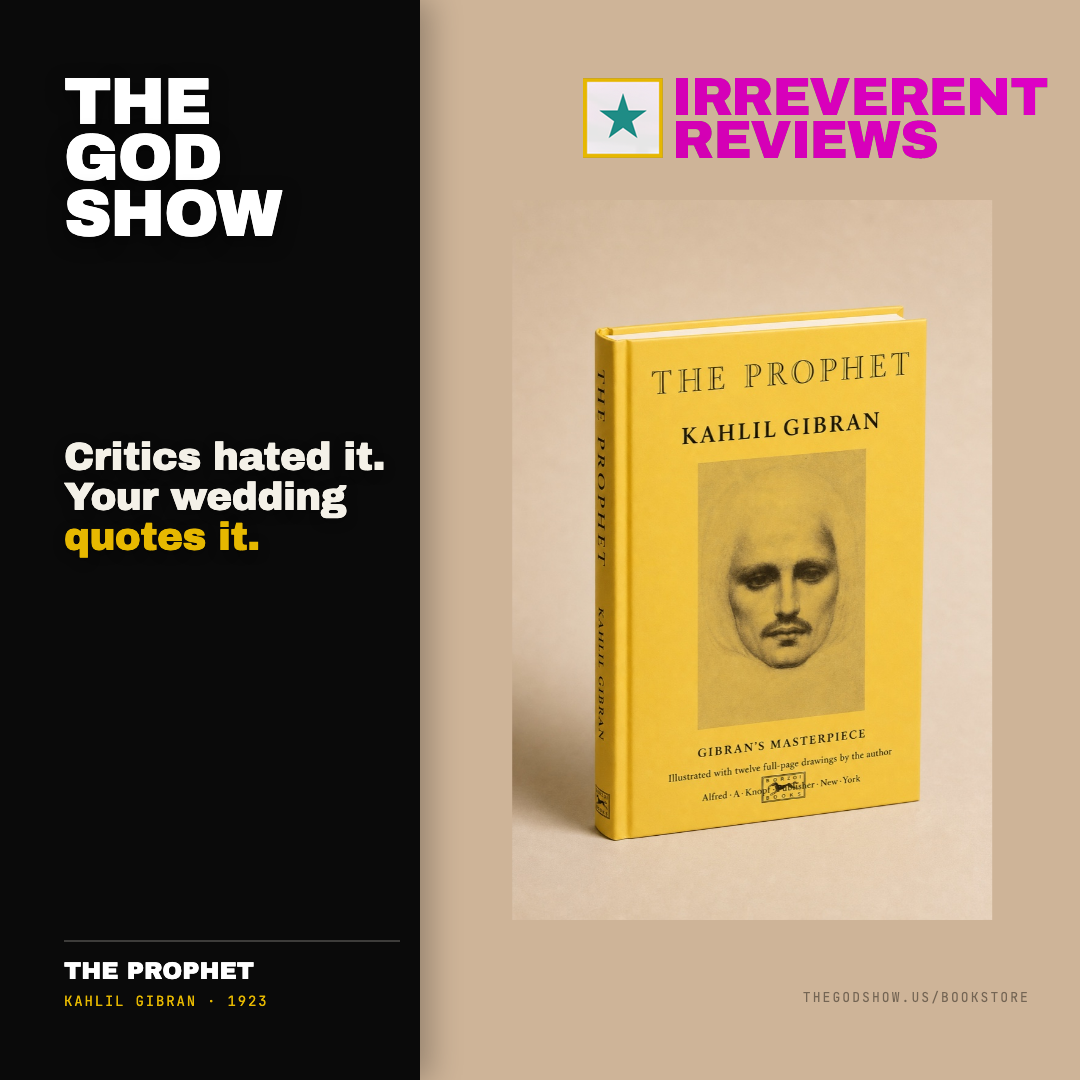
The Prophet
Kahlil Gibran · 1923
Twenty-six prose poems from a Manhattan studio became scripture for weddings, funerals, and Elvis—while the critics gritted their teeth for a century.
Buy on Amazon →In 1923, a Lebanese immigrant painting in a cramped Manhattan studio published twenty-six prose poems and accidentally wrote the wedding industry's holy book. Kahlil Gibran's Almustafa—a prophet about to sail home after twelve years in exile—is cornered at the dock by townspeople demanding wisdom, and obliges on love, marriage, children, work, joy, sorrow, and death, in cadences pitched somewhere between the King James Bible and a sunset. The literary establishment dismissed it on arrival and has kept dismissing it ever since. The book did not notice: never out of print, translated into more than a hundred languages, tens of millions of copies sold, and beloved by Elvis Presley, who gave away copies the way other men hand out business cards.
Scripture Without a Church
The ideas, paraphrased: your children arrive through you but do not belong to you; lovers should leave space in their togetherness, like pillars holding one roof; your daily work is love made tangible, or it is the wrong work. None of this is rigorous philosophy, and that is the secret. Gibran built a faith with no doctrine, no clergy, and no membership fee—comfort without commandments—which is why it gets read over both cradles and caskets by people who agree on nothing else.
Mary Haskell's Investment
The silent partner was Mary Haskell, the Boston headmistress who bankrolled Gibran's art training in Paris, edited his English line by line, declined to marry him, and stayed his confidante to the end—her journals are the receipts of the collaboration. Gibran himself died at forty-eight in 1931, his liver wrecked, and left the book's royalties to his hometown of Bsharri, which thanked him by litigating over the money for decades. Meanwhile the reviews stayed venomous and the sales stayed vertical. The professors called it kitsch for a hundred years, and the kitsch buried them all. In 2026, AI wedding-speech generators plagiarize him daily—Almustafa finally has disciples who also work in cadences.
“The professors called it kitsch for a hundred years, and the kitsch buried them all.”
Verdict
Is it great literature? Wrong question. It is great liturgy—deep the way a toast is deep, at the exact moment you need one, which is why it surfaces at every threshold of a human life. The critics keep explaining why it should not work, and the book keeps working, and only one side of that argument gets read at funerals. Raise whatever Almustafa was drinking—he never says—and let the professors seethe.