


































Irreverent Reviews
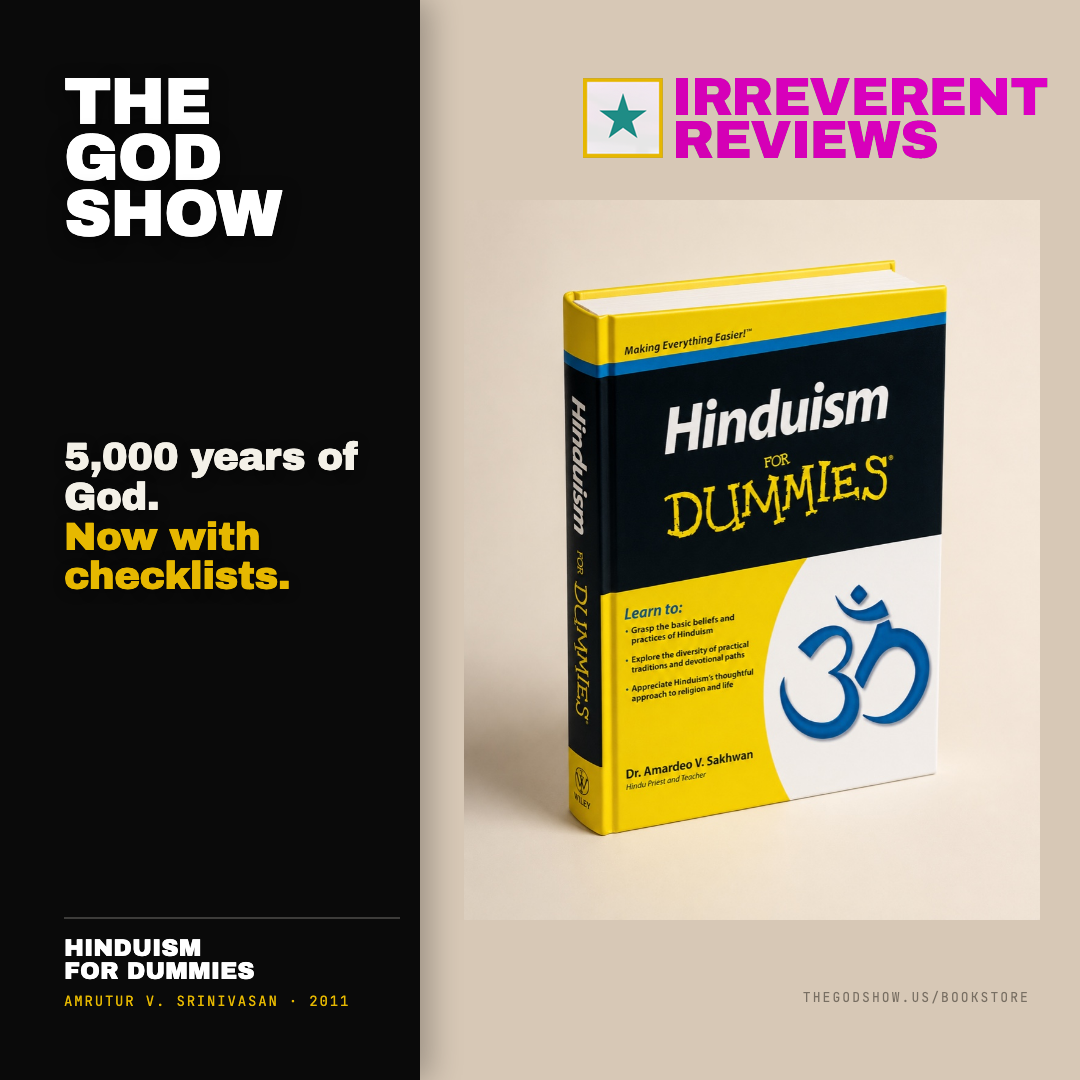
Hinduism For Dummies
Amrutur V. Srinivasan · 2011
The oldest living religion — no founder, no headquarters, no single book — explained by the publishing format that requires all three.
Buy on Amazon →There is something almost theologically perfect about this object: Hinduism — a five-thousand-year river with no founder, no headquarters, no pope, no single scripture, and a traditional god-count of 330 million — delivered in the yellow-and-black livery of the franchise that taught your uncle Excel. Yes, that series, the one with the cartoon mascot. Applied to what is by many countings the oldest continuously practiced religion on earth. The author is in on the joke without ever telling it: Amrutur V. Srinivasan is a trained engineer who helped found Connecticut's first Hindu temple society and spent decades officiating its weddings, blessings, and rites. Engineer-priest turns out to be exactly the right job title for this assignment.
The Format Versus the Infinite
The Dummies machine demands bullet points, margin icons, and tidy takeaways; Hinduism has declined, politely and for millennia, to be one thing. Watching these two forces negotiate is half the entertainment. Karma gets a definition box. Reincarnation gets a numbered list. Somewhere, a thousand rishis who taught by riddle and silence are slow-clapping. Srinivasan gamely itemizes the four aims of life — dharma, artha, kama, moksha: righteousness, prosperity, pleasure, liberation, in roughly that order of dinner-party acceptability — plus the four life stages, the four yogas, the trinity of Brahma, Vishnu, and Shiva, and the rites that cover a Hindu life from first breath to last fire. The 330 million figure gets its honest gloss: traditional shorthand for more divinity than any census can hold, one Brahman wearing infinite faces. The infinite, it turns out, can survive a sidebar.
Actually, It's Good
Roast the format all day — the content is solid and occasionally lovely. Temple etiquette explained without condescension. Home puja laid out so a curious neighbor could genuinely follow along. Festivals, food, weddings, why no Hindu is required to pick one god or any god at all, and why the tradition shrugs serenely at questions that make Western theology hyperventilate. The sacraments that mark a life, from naming ceremony to cremation, get walked through with the steadiness of a man who has actually stood at the fire and said the words. In 2026, when chatbots flatten every faith into auto-generated explainer mush, there is something quietly honorable about a temple priest sitting down to write his own explainer, margin icons and all. He would rather you learn it slightly cartoonish than learn it wrong.
“The infinite, it turns out, can survive a sidebar.”
Verdict
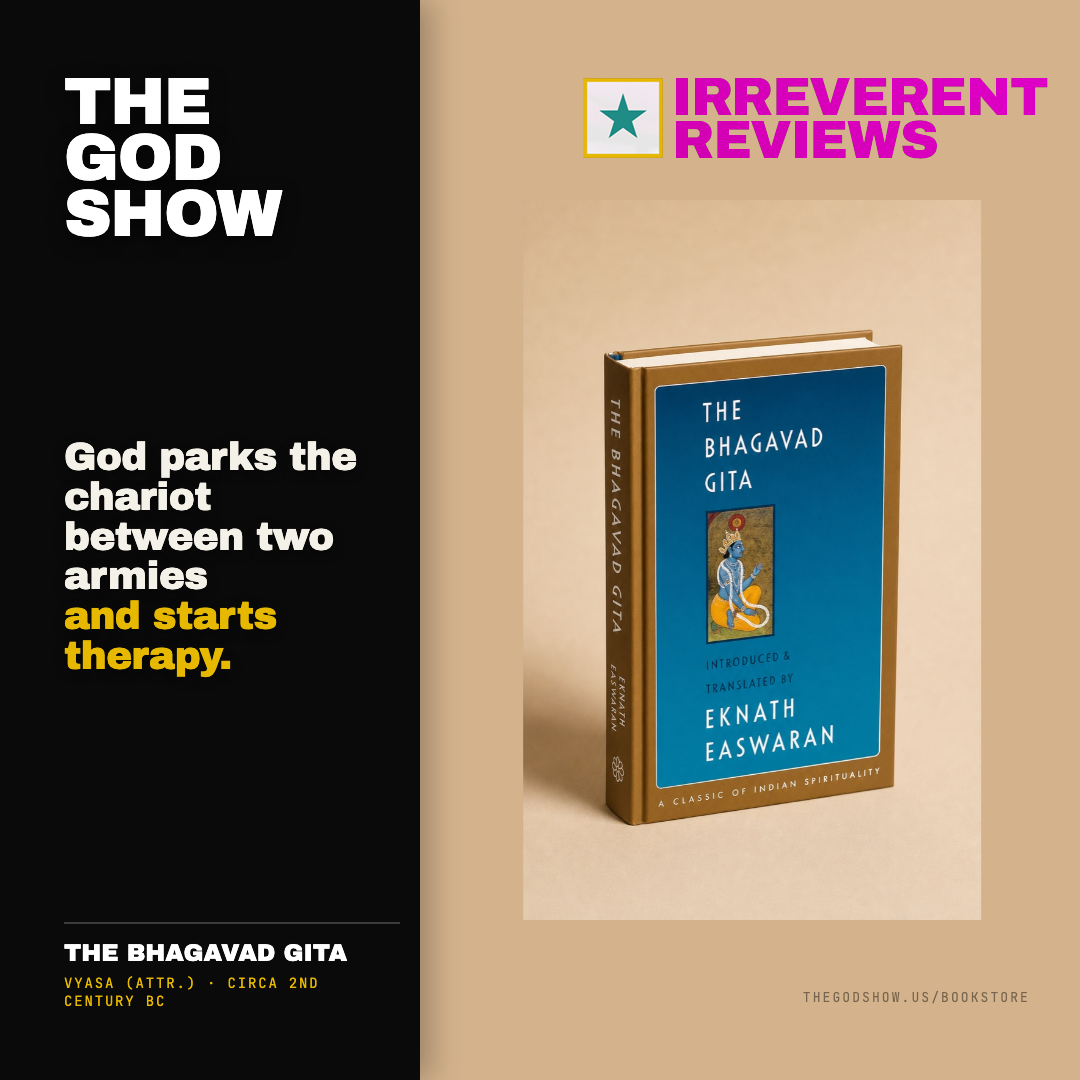
This is a gateway book and it knows it — every chapter quietly points toward the Gita, the Upanishads, and the epics, like a docent nodding at the originals down the hall. Read it for the scaffolding, then go meet the cathedral. And toast the beautiful absurdity that delivers truth anyway: five millennia of seeking, one yellow paperback. Moksha not included. Some assembly required. Eternity sold separately.