














































Irreverent Reviews
The Fall
Albert Camus · 1956
In a foggy Amsterdam bar, a charming ex-lawyer buys you a drink and performs the most weaponized confession in literature. You are not the audience. You're the catch.
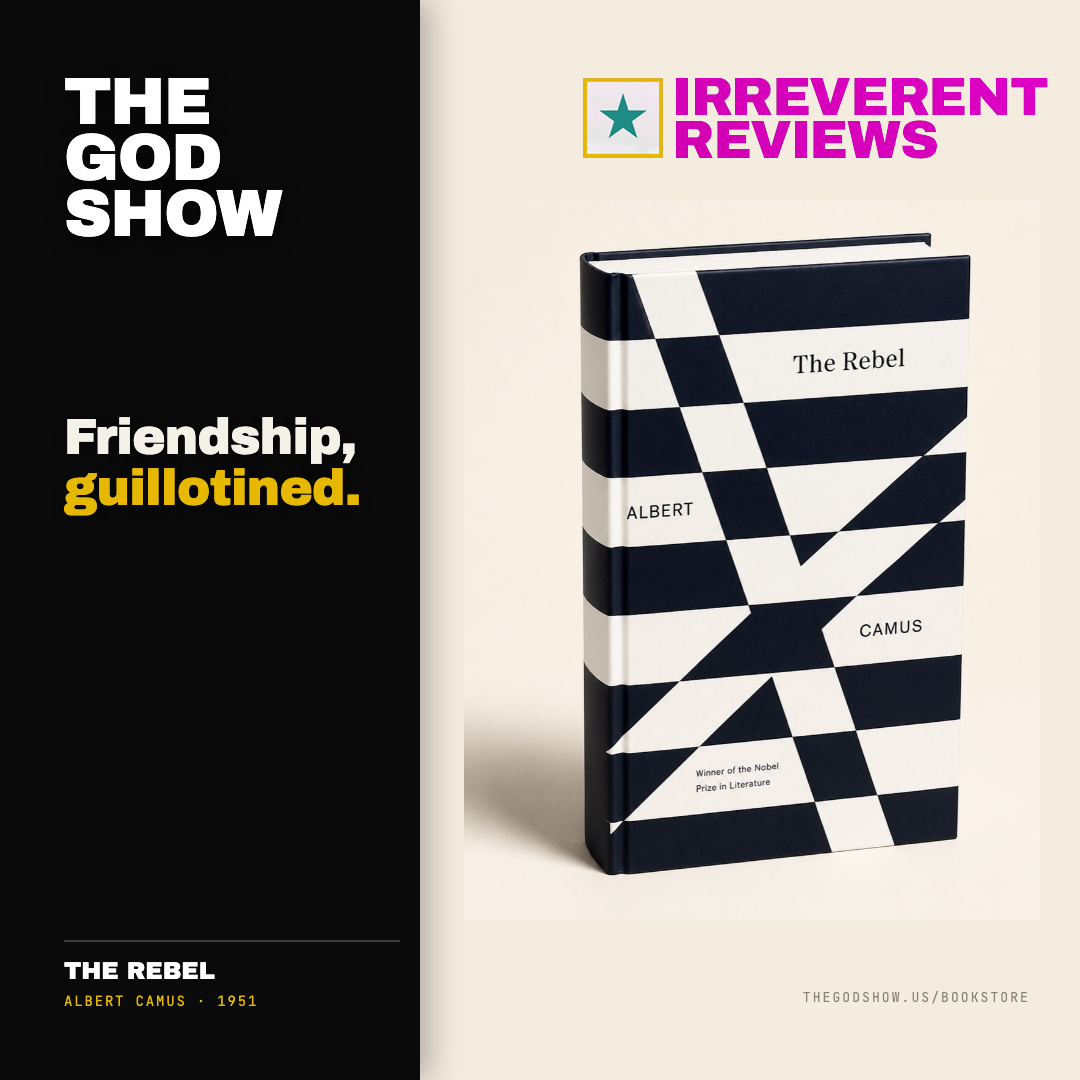
Buy on Amazon →The last novel Camus finished is ninety-odd pages of one man talking, and it is the most hostile hospitality in literature. In a sailors' bar called Mexico City, deep in Amsterdam's fog and neon, a silver-tongued Parisian named Jean-Baptiste Clamence attaches himself to a stranger — functionally, you — and across five nights delivers a confession so charming, so self-lacerating, and so precisely engineered that you never notice the exits sealing. Camus wrote it in 1956, flayed and furious after the intelligentsia's pile-on over The Rebel, and every sentence is a razor wrapped in a cocktail napkin.
The Nicest Man in Paris
Clamence was, by his own loving account, magnificent: a celebrated defense lawyer who took only noble causes, guided blind men across boulevards, gave up bus seats, raised his hat with perfect timing. He lived, he says, on a summit, breathing the thin delicious air of his own virtue. Then, one November night on the Pont Royal, he passes a young woman in black leaning over the rail; moments later he hears a body strike the water and a cry travel downstream — and he keeps walking. Tells no one. Years later, laughter starts trailing him across Paris, and the whole edifice of his goodness stands revealed as what it always was: a performance staged for an audience of one.
The Judge-Penitent Scam
Ruined for sincerity, Clamence invents a profession: judge-penitent. The mechanics are diabolical. He confesses first — lavishly, entertainingly, in a self-portrait painted so general that it slowly becomes a mirror — and by the time he finishes, you are rehearsing your own confession. Penance up front purchases the right to judge forever after. His confession is a loaded gun handed to you grip-first. The set dressing is perfect: Amsterdam's concentric canals stand in for the circles of hell — Clamence cheerfully notes you're drinking in the last one — and in his cupboard sits the stolen Just Judges panel from the Ghent Altarpiece, justice itself kept as contraband. In 2026 Clamence would simply have a podcast — vulnerability as content, absolution as engagement, a parasocial confession booth with ad reads. He invented the format seventy years early.
Who's Under the Mask?
The Paris parlor game, then and now: who is Clamence? A parody of Sartre and the Saint-Germain moralists who preached justice from café banquettes and had just excommunicated Camus? Partly, obviously. A self-portrait dipped in acid — the celebrated humanist admitting his decency always had an audience in mind? Also that, and Camus barely hides it. The satire is load-bearing in both directions; nobody walks out clean, including the author, especially the reader. Even Sartre, eulogizing Camus in 1960, singled out The Fall as perhaps his most beautiful and least understood book — a generous call on a novel that may contain the most vicious caricature of Sartre ever printed.
“His confession is a loaded gun handed to you grip-first.”
Verdict
It ends with the trap snapping shut: Clamence dreams the woman falls again, that he gets his second chance — and admits, with the only honesty left in him, his relief that second chances never come; the water, after all, would be freezing. The Fall is short enough to read in one evening and corrosive enough to spend ten years in your bloodstream. So take the barstool. Accept the gin. Let the nicest man in Amsterdam buy the round — just understand that when he says brother, he means accomplice.