















































Irreverent Reviews
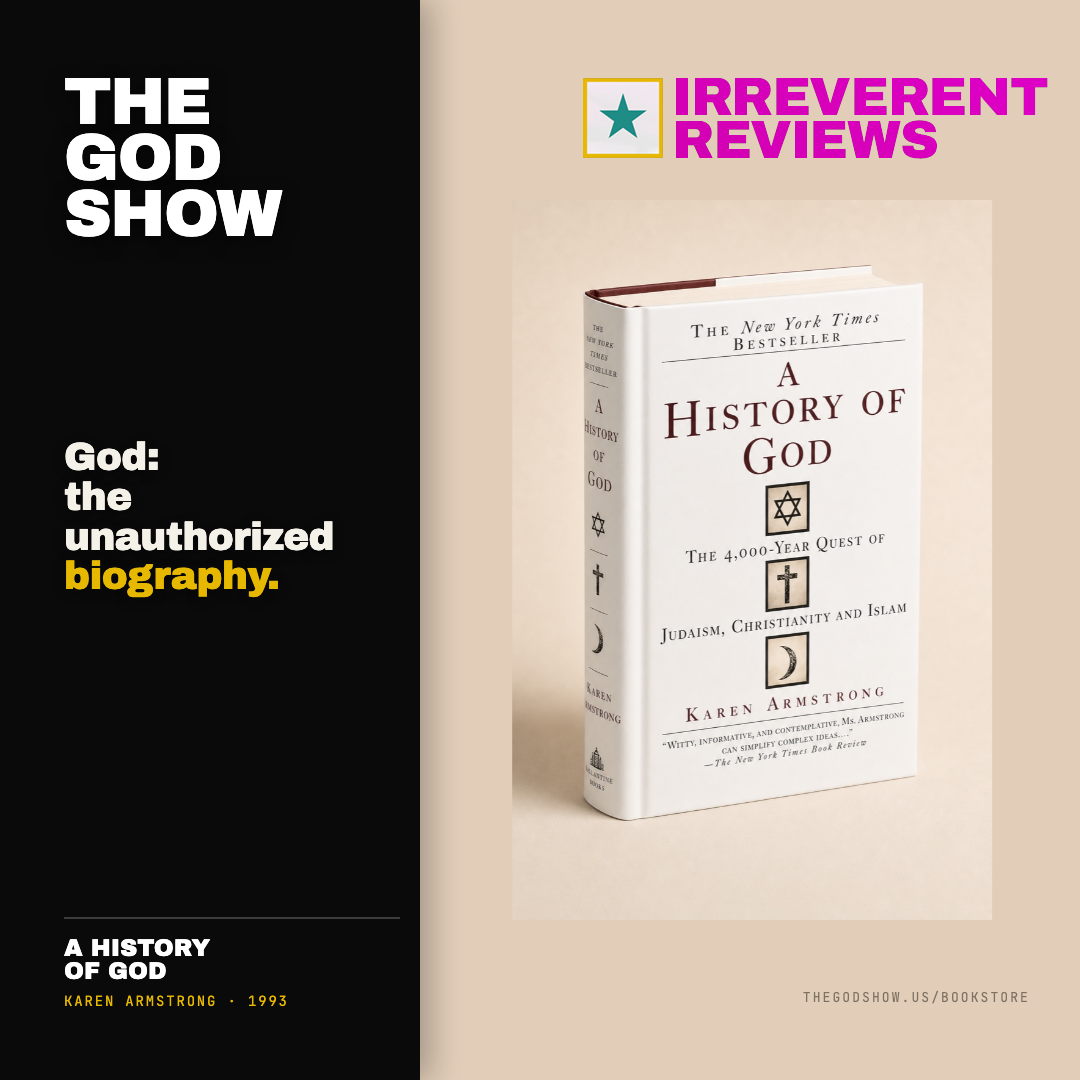
Islam: A Short History
Karen Armstrong · 2000
Published in 2000 to polite reviews; one Tuesday in September turned it into the most urgently thumbed paperback in America.
Buy on Amazon →The Modern Library Chronicles made authors an indecent proposal: compress a civilization into something a passenger could finish in one long flight. Karen Armstrong drew Islam—fourteen centuries, three continents, a constellation of empires, one schism still bleeding—and delivered a volume slim enough to lose in a coat pocket. It appeared in 2000 and sold respectably. Then the towers came down, and this little book became America's emergency syllabus, snatched up by anchors, senators, and seatmates trying to acquire, over a single weekend, the millennium and a half of context the country had skipped. Armstrong became, overnight, the West's designated explainer—an ex-nun translating a fourteen-hundred-year-old civilization between commercial breaks. Few books have ever been promoted so violently by events their author would have given anything to prevent.
Politics Is the Sacrament
Armstrong's organizing insight genuinely clarifies. Christianity spent its first three centuries as a persecuted minority, so it learned to locate salvation in the private soul; Islam was born running a city. Muhammad was prophet and statesman at once—Medina was a polity, the community itself was the miracle, and building a just society was not the side quest but the sacrament. Once you see that, the tradition's nervous system makes sense: political catastrophe registers as theological crisis. The assassinations of three of the first four caliphs, the slaughter at Karbala, the Mongol annihilation of Baghdad in 1258, the long humiliation of colonization—each lands like an argument against heaven, and each generation's answer reshapes the faith. Her corollary is the book's sharpest blade: fundamentalism is not the medieval core resurfacing but a modern stress fracture, fear of annihilation wearing tradition as armor—and it has siblings in every faith on earth.
The Cost of the Speed-Run
Compression is a kind of violence, and Armstrong commits it with a surgeon's calm. Conquests glide past in a clause; al-Ghazali gets a cameo where he deserves a season; the gunpowder empires—Ottoman, Safavid, Mughal—blur like stations through a train window. Detractors called the result an apologia with the rough edges sanded off; admirers called it the fastest honest antidote to the monolith myth, the fantasy that more than a billion people share one mind. In 2026 the monolith myth remains every demagogue's favorite shortcut, which keeps this slim book both in print and in argument. Both camps are right, which is what happens when you do a civilization in the time most histories spend clearing their throat.
“Compression is a kind of violence, and Armstrong commits it with a surgeon's calm.”
Verdict
Treat it as a gateway, not a meal—Armstrong herself stocks the exits with further reading. But as crash courses go, this one is honest about being a crash course, and honest crash courses are how prejudice dies. Read it on the flight; land knowing the difference between Karbala and a chyron. Then buy the thousand-page books it was quietly an advertisement for. To the gateway.