



































Irreverent Reviews
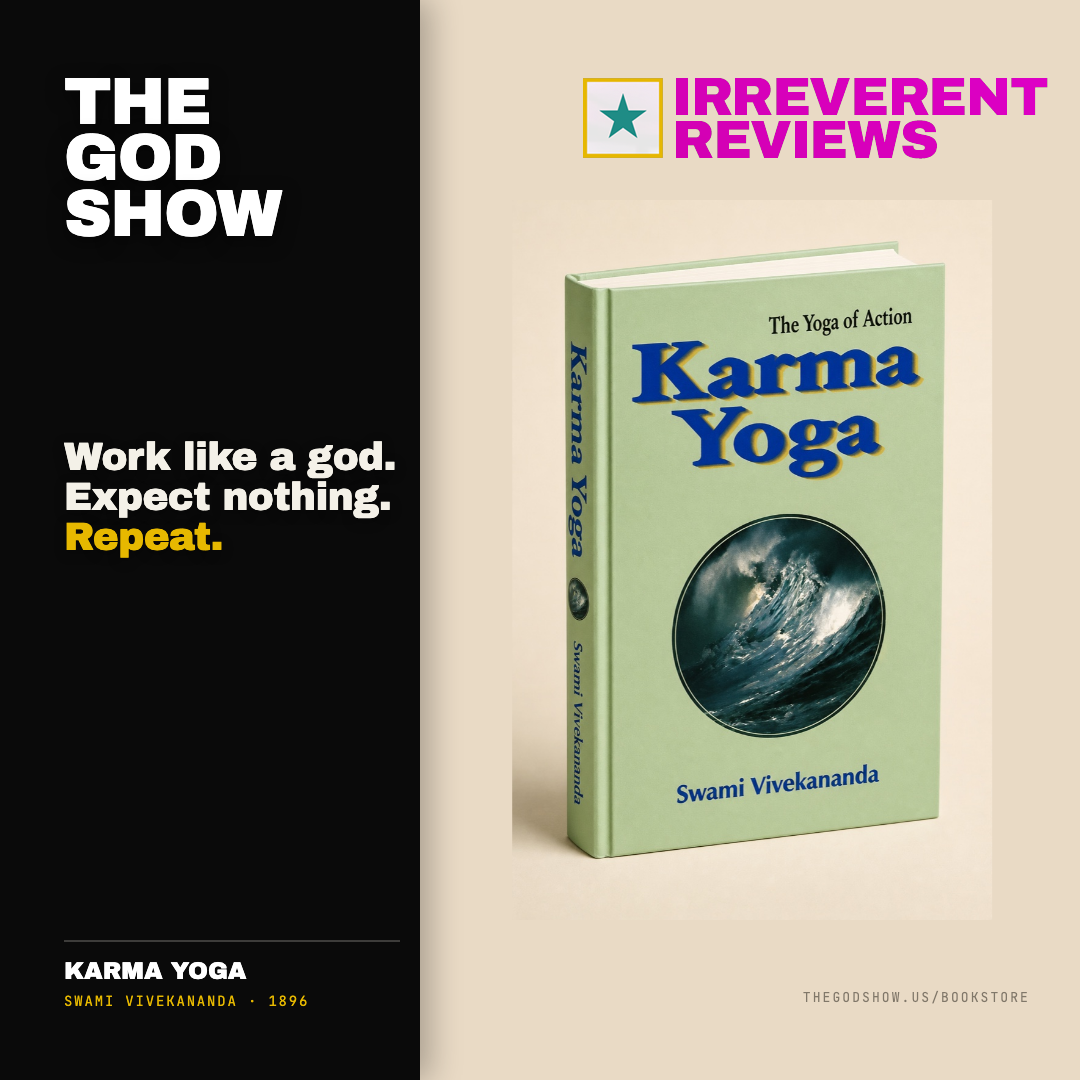
Karma Yoga
Swami Vivekananda · 1896
An orange-robed monk rents rooms in 1890s Manhattan and tells the Gilded Age that the secret of work is wanting nothing from it.
Buy on Amazon →In September 1893, a thirty-year-old monk in an orange turban stood up at the Parliament of Religions in Chicago, greeted several thousand strangers as his own family, and the hall rose and roared before he had made a single argument. The American press, never subtle, billed Swami Vivekananda as a cyclone from the East. Two years later the cyclone was renting rooms in Manhattan, lecturing to whoever climbed the stairs, while a hired English stenographer named J. J. Goodwin — a disciple within weeks, it happened that fast — took down every word. Karma Yoga is those transcripts: lectures from the winter of 1895-96 that turned the Gita's hardest teaching into street-level instruction. He preached detachment to a city that invented the ticker tape.
Work Is Worship, Results Are Litter
The thesis arrives like a slap in a velvet glove: work builds character only when you stop billing it. Do the task in front of you with everything you have — sweep, argue, build, parent — and surrender the outcome the moment it leaves your hands. No monastery required; the office, he insists, burns off ego as well as any cave. Then comes his most unfashionable claim: helping the world is a privilege extended to you, not a favor you grant it. Be grateful to the person you serve — they are the gymnasium where your selfishness goes to die. He likens improving the world to straightening a dog's curly tail: it springs back every time, and you keep working anyway, because the work was only ever rebuilding you. It is the rare spiritual book that gets more radical the more ordinary your life is.
The Monk Who Burned Down for It
He lived his own sermon at fatal speed: crisscrossing America and England on lecture tours, founding the Ramakrishna Mission in 1897, sleeping little, eating badly, asthma and diabetes stalking him the whole way. Dead at thirty-nine, in 1902. His master, Ramakrishna, had been an ecstatic temple mystic of Calcutta who could barely be kept in ordinary conversation with this world; Vivekananda translated that raw voltage into something a Gilded Age clerk could use on a Tuesday shift. In 2026, his little book sits like a virus inside hustle culture: it agrees you should work relentlessly, then deletes the part where you get to keep anything — the brand, the metrics, the credit. Grindset with the self removed is just service. That was the whole trick.
“He preached detachment to a city that invented the ticker tape.”
Verdict
Karma Yoga is barely a hundred pages and contains no exercises, no journaling prompts, no app integration — just a voice from 1896 informing you, with terrifying cheerfulness, that liberation is available at your desk this very afternoon if you will stop invoicing the universe. Raise a glass to working like it matters and letting go like it doesn't. Then get back to work.